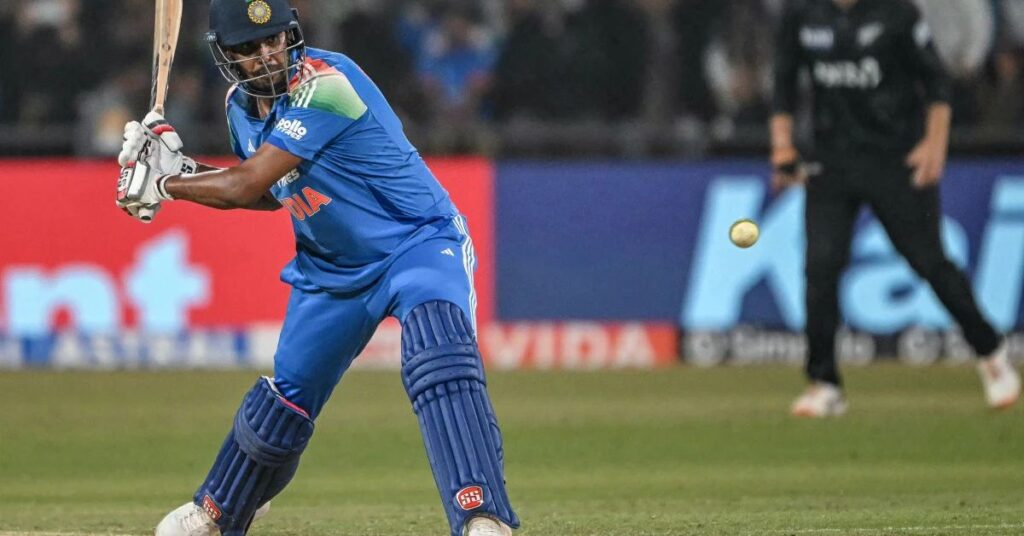

The build-up to the India vs New Zealand 1st T20I has sparked intense debate, not just about tactics and combinations, but also about selection dilemmas that reflect India’s shifting white-ball philosophy. At the centre of this discussion is Harshit Rana, the young fast bowler whose recent ODI fifty surprised many and showcased his growing all-round potential. Yet, despite that encouraging batting display, strong indications suggest that Rana may be left out of India’s Playing XI for the opening T20I against New Zealand.
On the surface, this appears harsh. After all, India have long searched for a genuine pace-bowling all-rounder, and Rana’s lower-order contribution in ODIs hinted at a solution. However, T20Is are a different beast altogether, demanding specific skill sets, role clarity, and tactical precision. Selection, therefore, is rarely about recent performances alone — it is about fit, balance, and match-ups.
This SEO-optimised, in-depth blog (2000+ words) analyses India’s predicted Playing XI for the 1st T20I vs New Zealand, examines why Harshit Rana may be axed despite his ODI fifty, explores India’s selection philosophy, and breaks down how conditions, opposition strengths, and World Cup planning influence these decisions.
Context: Why the 1st T20I vs New Zealand Is Crucial for India
India vs New Zealand is no ordinary bilateral series. Over the last decade, New Zealand have emerged as one of India’s toughest opponents across formats, often outperforming them in high-pressure ICC events.
The 1st T20I is significant because:
- It sets the tone for the series
- It offers selectors a chance to test combinations
- It plays a role in T20 World Cup preparation
Every decision — especially around fringe players like Harshit Rana — is therefore magnified.
Harshit Rana’s ODI Fifty: Why It Turned Heads
Harshit Rana’s ODI half-century recently caught widespread attention for several reasons:
- He batted with composure under pressure
- He showed improved technique against pace and spin
- He added valuable lower-order runs
For a fast bowler, scoring a fifty in ODIs is not routine. It naturally raised questions about whether India had finally found a pace-bowling all-rounder capable of adding depth to the batting.
However, translating ODI promise into T20 selection is not straightforward.
ODI vs T20I: Why Performances Don’t Always Carry Over
One of the biggest misconceptions among fans is assuming that success in one format guarantees selection in another.
Key differences:
- ODIs allow time to build an innings
- T20Is demand instant impact
- Batting positions and roles differ significantly
Rana’s ODI fifty came in a situation where:
- He had time to settle
- Bowlers were operating with defensive fields
In T20Is, lower-order batters often face:
- Full pace from the start
- Attacking fields
- High-risk situations
This context matters when selectors evaluate readiness.
India’s Current T20 Strategy: Specialists Over Projects
India’s recent T20 approach has leaned heavily towards:
- Role-specific specialists
- Players with proven T20 skill sets
- Defined match-up advantages
This strategy has reduced experimentation at the Playing XI level, especially in the opening matches of a series.
For Harshit Rana, this creates a challenge:
- He is still evolving as a T20 bowler
- His batting, while promising, is untested at T20 international level
Selectors may prefer certainty over potential in the 1st T20I.
The Likely Conditions for the 1st T20I
Conditions play a huge role in team selection.
The 1st T20I venue is expected to:
- Offer decent bounce
- Slightly assist seam early
- Become batter-friendly later
In such conditions, India may prioritise:
- Bowlers with strong death-over skills
- Batters who can clear the ropes consistently
This could work against Rana, whose primary strength remains hit-the-deck bowling rather than specialist death bowling.
New Zealand’s T20 Strengths: Why India Need Precision
New Zealand’s T20 side is known for:
- Smart batting against pace
- Strong finishing ability
- Exploiting loose overs ruthlessly
Against such an opponent, India need:
- Bowlers who can execute under pressure
- Batters who can score at 150+ strike rates
Selection will be influenced heavily by these demands.
Why Harshit Rana May Be Axed Despite ODI Heroics
The possibility of Rana missing out stems from several factors:
1. T20 Bowling Skill Set Still Developing
While Rana has pace and aggression, his:
- Variations
- Yorkers
- Slower balls
are still a work in progress at the international level.
2. Limited T20I Experience
India often ease players into T20Is rather than throwing them in immediately, especially against strong opponents like New Zealand.
3. Competition for Pace Slots
India’s pace cupboard is full, with several bowlers offering:
- Proven T20 experience
- Better death-over control
- Match-up versatility
This makes selection brutally competitive.
India’s Predicted Playing XI vs New Zealand – 1st T20I
Based on form, balance, and recent selection trends, here is India’s predicted Playing XI:
Openers
Rohit Sharma (C)
Yashasvi Jaiswal
Rohit brings experience and leadership, while Jaiswal provides fearless intent in the powerplay.
Middle Order
Virat Kohli
Suryakumar Yadav
Rishabh Pant (WK)
This trio offers:
- Stability
- Explosiveness
- Match-winning ability
Suryakumar remains India’s most destructive T20 batter, while Pant adds unpredictability.
All-Round Options
Hardik Pandya
Axar Patel
Hardik is India’s premier seam-bowling all-rounder, while Axar offers:
- Left-arm spin
- Lower-order batting
- Excellent fielding
These two reduce the need for another bowling all-rounder.
Bowlers
Kuldeep Yadav
Jasprit Bumrah
Arshdeep Singh
Mohammed Siraj
This attack provides:
- Variety
- Experience
- Proven T20 success
Kuldeep’s wrist spin adds wicket-taking threat, while Bumrah and Arshdeep handle the death overs.
Where Harshit Rana Misses Out
In this combination:
- Hardik already fills the seam all-rounder role
- India opt for specialist bowlers over a developing option
- Team balance favours certainty
Rana, therefore, becomes the unlucky omission rather than a reflection of poor form.
The Bigger Picture: Is This the End for Rana?
Absolutely not.
Selectors may be thinking:
- Long-term development
- Controlled exposure
- Specific roles rather than forced inclusion
Rana’s ODI fifty has strengthened his case — just not immediately in T20Is.
Learning From Past Selection Decisions
India have previously rushed players into T20Is based on limited success in other formats, often with mixed results.
Recent philosophy suggests:
- Build confidence in one format
- Introduce gradually into another
- Avoid overwhelming young players
Rana’s omission could actually help his long-term growth.
Could Rana Play Later in the Series?
Very likely.
If:
- India seal the series early
- Workloads need management
- Conditions change
Rana could feature in later T20Is where experimentation is safer.
Fan Reaction: Divided Opinions
Fans are split:
- Some feel Rana deserves a chance after his ODI fifty
- Others agree T20Is need specialists
This debate highlights how closely selection decisions are scrutinised.
What Rana Needs to Do to Cement His T20I Spot
To become a regular in T20Is, Rana must:
- Develop reliable slower balls
- Improve death-over execution
- Add consistency to his batting
Domestic T20 leagues and A-tours will be crucial platforms.
India’s World Cup Lens on This Series
Every T20I before the World Cup is viewed through a selection lens.
India are asking:
- Who fits specific roles?
- Who performs under pressure?
- Who adapts quickly?
Rana is still answering these questions.
Selection Is About Balance, Not Sentiment
Cricket selection is often misunderstood as reward-based. In reality, it is:
- Role-based
- Condition-based
- Opposition-based
Rana’s ODI fifty is a positive marker, but not the sole criterion.
Could India Be Missing a Trick?
Some argue India should back Rana now to:
- Fast-track a pace all-rounder
- Build confidence early
- Reduce dependency on Hardik
This viewpoint has merit, but India appear cautious.
The Risk of Overloading Young Players
Throwing Rana into a high-pressure T20I against New Zealand could:
- Expose unfinished skills
- Dent confidence
- Create unrealistic expectations
Management may be protecting him.
Final Word on Harshit Rana’s Situation
Rana’s story is far from over. If anything:
- His ODI fifty has put him firmly on the radar
- His potential is now recognised
- Opportunities will come
Selection omissions at this stage are part of the journey, not a verdict.
Conclusion
India’s predicted Playing XI for the 1st T20I vs New Zealand suggests that Harshit Rana may miss out despite his impressive ODI fifty — a decision driven more by tactical balance than a lack of faith. In a format as unforgiving as T20 cricket, India appear inclined to trust specialists and proven performers, especially in the opening game of a high-profile series.
Rana’s batting has undoubtedly strengthened his long-term case as a pace-bowling all-rounder, but T20I selection demands instant readiness and clearly defined roles. For now, patience seems to be the chosen path — for both the team management and the player.
If nurtured correctly, Harshit Rana’s moment will come. And when it does, India may well reap the rewards of having waited rather than rushed.